

Tatters
Hope feathers in the soul without words

Twelve years ago today, I woke up with my life in tatters for the first time. Surprisingly, not torn by my own hand, useless swatches and reams of shredded fabric draped over every surface of my life. I’d get a go at my own destruction soon enough. But on March 31st of 2014, I was just trying to take a bath.
More than taking a bath, I was trying to live the peaceful life I have now. I was trying to cook dinner, walk the dogs, put away the laundry, and nurture a relationship I cared deeply about. I was also trying to stay high the entire time, but my naïve 21-year-old self didn’t see how that might conflict.
As I lay in the bathtub, soaking in processed lavender, I heard something disturbing in the backyard. A familiar voice that sounded not so familiar in that moment said they were going to kill the dogs. “Kill the dogs,” I thought. How ridiculous. Those dogs were our babies.
Wrapped in a towel, I went to the backyard and asked what was going on. I heard the same not-so-familiar voice saying increasingly outrageous things. The rest you can read about in Wethersfield Road.
The following is from my piece posted a year ago today, Telling the Truth on April 1st. It says it better than I could today.
Every year, my body knows it’s late March before my brain does. My anxiety increases, and my dreams turn disturbing. It’s funny, in a fucked up kind of way, that the anniversary of the worst night of my life is always at the start of my favorite season. It’s a special time in Austin: when rainbow fields of wildflowers line the major roads, when our sunkissed skin is lovingly caressed by a barely there breeze, when the weather lulls us into a dreamy daze before ripping us a new ass hole with the summer heat. But it’s also when I remember how truly close I came to losing it all. It’s when I’m reminded of how some memories can forever alter our brain chemistry. It’s when I once again see my tendency to try to make a joke when it’s all so very unfunny.
Content Warning: Domestic Violence. If this subject is a tough one for you, proceed with caution.
According to UN Women, a woman dies at the hands of her intimate partner or family member every 10 minutes. I was dangerously close to becoming a part of that statistic on March 31st, 2014. The trauma of that night is etched in my bones like a fossilized exoskeleton. Images of cop cars flooding the street, a candle flickering in my neighbor’s dark bathroom where she hid me until help arrived, the shame of not taking my dogs with me when I escaped my house, the look in my mother’s eyes when she broke through the caution tape to embrace me. These things are a part of me.
But not in the way you might think. Most of the time, I no longer hold any anger or fear. I had to learn that the gymnastics in my brain are something to accept and observe rather than resist and resent. Thoughts and feelings around an event like this, even one that happened so long ago, are a natural human function, like sweating when you exercise.
And there have certainly been times over the past eleven years when my emotions and beliefs around this event felt out of control. But in recovery spaces, I learned how to let the giant waves of dysregulation, unmet expectations, and self-hate peak and then crash onto the shore. I learned to look on in curiosity, almost from an educational standpoint as the waters rose and fell over and over again and the sky shifted between storm clouds and pink clouds. It took a lot of heavy emotional labor to get to a place where I had the energy or space to do this type of observing, but man was it worth it to have the life I do today.
But there was a pretty disturbing punchline to the almost dying thing, and that was waking up on April Fool’s Day having to convince people that, “No, I’m not kidding. He really did try to kill me.” To which I’d often be met with the response: “How did you know he was really going to kill you?” I didn’t have much of a voice at the time, but a response that’s echoed in my mind the past eleven years made it into the final draft of my book because it is equally relevant to Amelia as she navigates her own domestic violence trauma:
You see, when someone looks at you and, without an ounce of irony, declares they intend to kill you, you sort of just believe them.
It’s no secret that in my debut novel Wethersfield Road, Amelia’s story is based loosely on my own, and I’m not here to tell you which parts are real and which parts aren’t, because the shield of autofiction has made me more brave and more honest than if I was telling the whole truth, and nothing but the truth, so help me God.
So today it’s been eleven years since the worst night of my life, and next month it will be eleven years since I moved into my house on Wethersfield Road, arguably one of the best days of my life, though I didn’t know it at the time. So when I say that house has arms and those arms wrapped around me and kept me safe while I fell all the way the fuck apart, I mean literally. It’s a part of me, and I’m a part of it. Traces of it are lodged in my soul from the time I spent putting myself back together within those walls.
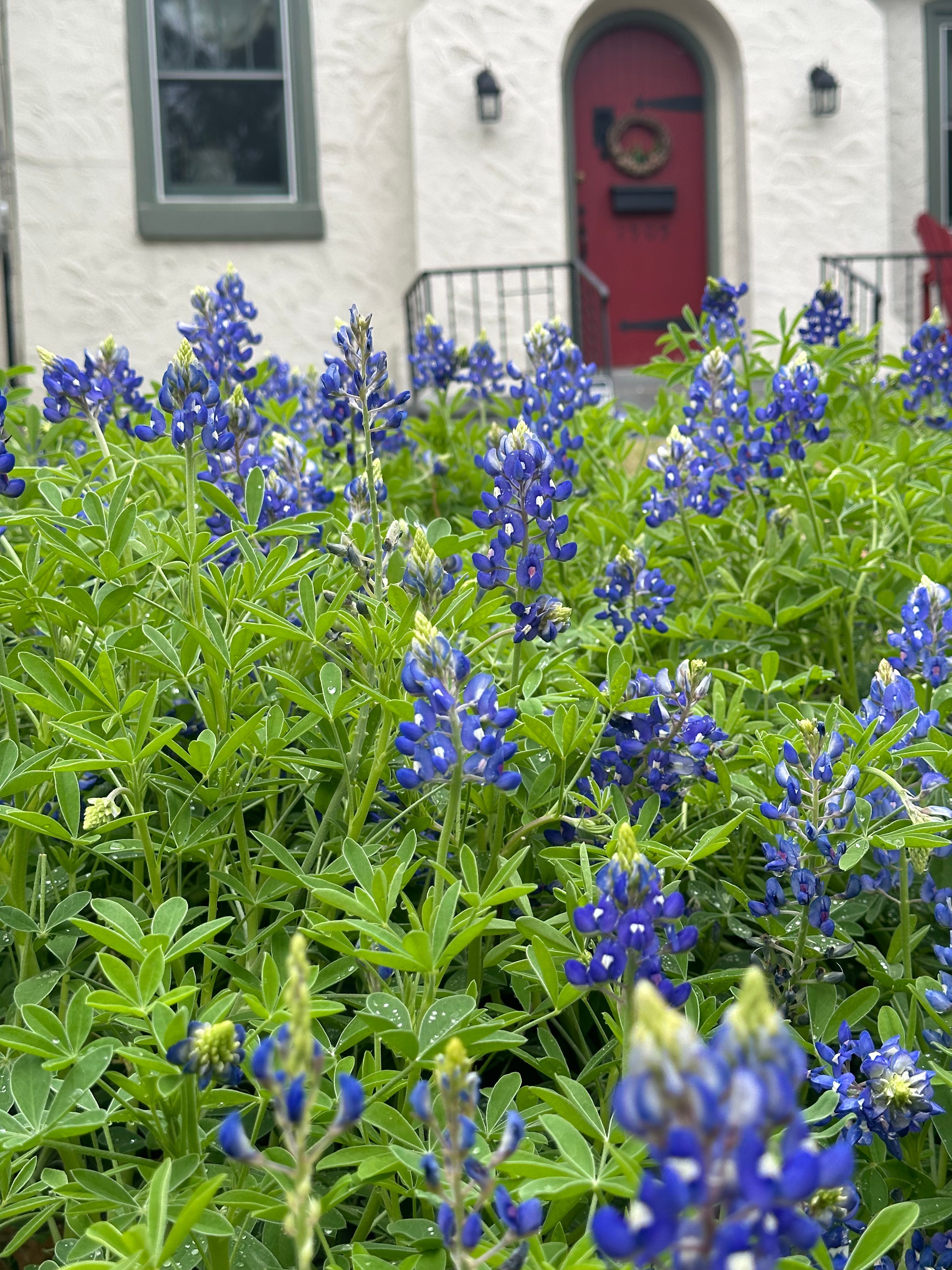
The excerpt below is a reflection that my editor and I decided to remove from my book in the interest of time and space, but it certainly applies both in my fictional world and my real world, so I wanted to share it here. Because when you realize that the bluebonnets were going to bloom whether or not you made it through the night, it dawns on you how truly insignificant you actually are. The following describes my heroine Amelia experiencing the one-year anniversary of her own night from hell:
When she got home later that day with her iced vanilla latte, she sat in the yard at Wethersfield Road and watched as Delilah splooted across the lawn, hind legs fully extended back with her belly flat to the warm earth. The pup loved to sunbathe in the late afternoon light. That morning, Amelia noticed a small grey and white owl that had made a temporary home out of the squirrel house in the big tree. This afternoon, his round, wise face remained in the small, circular window cut out at the front. The displaced squirrels played with their new babies in the branches, seemingly more than hospitable to the squatter owl. Cardinals, blue jays, and doves met up for an early dinner on the side of the patio where the bird feeder hung, perched on the wooden fence side by side, taking turns at the small windows of seed dispensers. They fluttered back and forth without haste or scarcity, confident they’d all have their equal fill.
She thought back to one year ago exactly. The night she almost lost a fight she hadn’t event realized had begun. His face flashed across her mind’s eye until she remembered the sickest joke of them all. The week her life fell apart was the same week the wildflowers bloomed along the Texas highways and in the garden beds lining the neighborhoods. She’d been self-centered enough at the time to consider it an insult from the Universe that her insides were so barren while the earth sprouted rainbows and magic. Texas wildflowers: the bluebonnets, Indian paintbrushes, primroses, and daisies—poured out of the earth, springing to life where dirt and brush had existed only weeks before. From abomination to expression of divine love, all within the span of a year.
And wasn’t that just the miracle of spring? That, no matter how dark and cold the winter, wildflowers would manifest themselves seemingly out of thin air? It was the time of year that most places thawed, but Austin simply went to sleep one night, grey and lifeless, and the next morning awoke to an abundance of vibrant color. She went inside to sit in one of the purple chairs and sip sleepy-time tea while she and Ethan processed their days. Peace. Serenity. Simplicity. She wanted it to be enough, and most of the time it was.
Then Shadow Amelia would appear and threaten to burn it all down, terrorizing her with the possibility of inappropriate outgoing texts or ordering a dozen cupcakes on DoorDash just for her. But for those quiet moments, Shadow Amelia remained dormant. The wisdom within her filled the space left behind and took in the way nature seemed at peace here, too, living in harmony with Wethersfield, right down to the way the fence made space for the big 200-year-old tree in the backyard—the pickets minding the gap, working alongside her trunk to enclose the yard.
Resources:
Now it’s been twelve years. And I am missing the house that saved me and thinking of everything she did for me. So I wrote her, Hope and Lilah, a poem.
It’s really fucking short; it was the exercise for the day in my journaling book.
Hope feathers in the soul without words.
Today, we are building a new life in a new house and making new memories, and I am so grateful, but I can’t help but be nostalgic for little old Wethersfield Road.
I'm so glad you made it out, and because you did, you gave the world Wethersfield Road. It's hard to leave behind the places we love, that are familiar and safe, but now Wethersfield Road will feel like a safe home to everyone who reads it.